

A recent letter cosigned by a venerable group of organizations, including Amnesty International, the Carter Center, Freedom House, and Physicians for Human Rights decries the current situation in northern Sri Lanka and calls on the Obama administration to “assume the leadership necessary to mobilize the international community to protect the surviving civilians and to hold accountable those responsible for mass atrocities.”
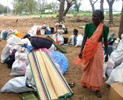
The letter speaks to how quickly the situation in Sri Lanka fell off the international radar. Mere months ago, a violent military campaign raged on a tiny swath of northeast coast, during which the Sri Lankan government went after Liberation Tamil Tigers of Eelam, LTTE, fighters with little regard for civilian protection. In turn, the LTTE resorted to its time-honored tactics of suicide attacks and using civilians as human shields to fend off the offensive. The conflict reached a dramatic climax when the LTTE’s longtime leader was killed and the LTTE structure disintegrated. But, after what was touted as the end to Sri Lanka’s 26-year civil war, the effects of the crisis on civilians are still unfolding. The Sri Lankan government has thus far been woefully cavalier with the lives of the more than 300,000 Sri Lankans who have been forced to remain in squalid IDP camps while the authorities work to filter out all former Tigers. Furthermore, impunity reigns, with both sides accused of violating laws of war and committing war crimes but little being done to investigate and bring to justice those responsible. The letter’s authors frame their concern in the context of a broader message sent by the international community’s inaction:
The failure of the international community to take concrete action to protect civilians in Sri Lanka has given the green light to regimes around the world and has signaled that there is nothing that the international community will do when a government kills its own people under the cover of sovereignty.
Time and again, human rights crises come in and out of focus even as they continue to burn. This letter is a powerful reminder that the international community must stay engaged if it hopes to respond to humanitarian crises in ways that are more meaningful than the typical “too little, too late.”